regulation and compliance
Allergen Labeling and Cross Contact Rules for Cake Orders
Nine major allergens must be declared by name in the United States, sesame among them since 2023. What federal labeling law and state cottage food rules require on a custom cake order, and what you cannot promise about cross contact.
The nine major food allergens and how sesame joined the list
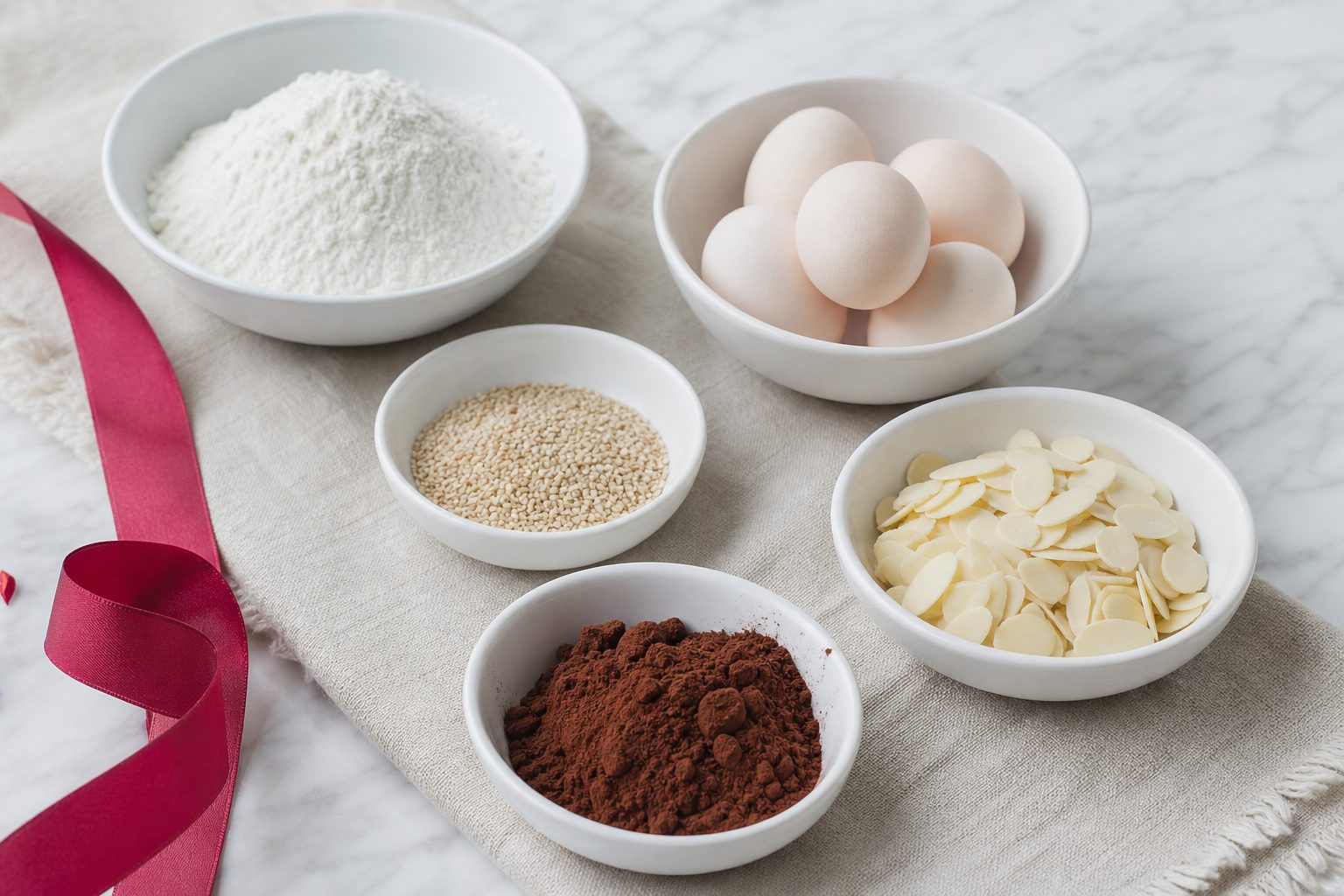
Since 2004, federal law has required bakers and food producers in the United States to declare certain ingredients that cause the majority of serious allergic reactions. These are milk, eggs, peanuts, tree nuts, soy, wheat, fish, and crustacean shellfish. In 2023, sesame was added as the ninth major allergen. The change was mandated by the Food Allergy Safety, Treatment, Education, and Research Act, which recognized sesame's prevalence in severe food allergies.
Many commercial ingredients, baking mixes, flavorings, decorations, may contain one or more of these allergens. A bakery that adds tahini to a buttercream or sprinkles sesame seeds on a cake must now flag sesame just as they would peanuts or tree nuts. Cake shops that buy in ready-made fondant or fillings need to check that these new rules are reflected on their own labels and order forms.
Sesame can appear in unexpected places, such as seed blends on custom cakes, certain flavor extracts, or imported ingredients. With the new regulation, even trace amounts matter. Bakeries that once skipped reviewing for sesame must now treat it with the same caution as milk or eggs.
Keep reading: Costing a Three Tier Wedding Cake From Flour to Delivery
Declaring an allergen in plain English versus hiding it in an ingredient name
Federal law requires that the nine major allergens be declared in language the average customer can understand. If a cake contains a mix that includes "albumin," the label must say "egg" because most people do not recognize albumin as an egg protein. Similarly, "casein" or "whey" must be followed somewhere on the label by "milk."
Ingredient lists are not enough if they bury allergens under chemical or technical names. "Sesamum indicum" is not a substitute for "sesame." The Food Allergen Labeling and Consumer Protection Act requires either that the allergen be included in the ingredient list in plain English, such as "egg," or that it be called out in a "Contains:" statement after the list. The rule is designed to protect customers who may skim a label quickly while picking up an order.
For custom cakes, this means that even if you use a packaged ingredient with a long list, you must clarify the presence of allergens. If a filling is made with marzipan, the label or order sheet must say it contains "almonds (tree nuts)." Leaving this out can expose shops to both customer risk and regulatory penalties.
What a cottage food label must carry, and how the states differ
Most states allow home-based bakeries to operate under "cottage food" rules, but the details differ. Nearly all require the name and address of the producer, a list of ingredients in descending order by weight, and clear allergen declarations. For the nine federal allergens, state rules usually mirror federal law, but some require even stricter warnings.
For example, some states mandate a specific statement, such as "Made in a home kitchen that has not been inspected by the Department of Health." Others require a separate line for each allergen, or prohibit certain types of allergen claims entirely. A few states go further, asking for both the ingredient and the source, for example, "whey (milk)" or "lecithin (soy)."
Some states have rules about font size, placement, or the use of bold or uppercase letters for allergen statements. Many require allergen information to appear on each individual package, not just on a master invoice. In states with licensing requirements, spot checks can include review of allergen labeling on both prepackaged goods and custom order tickets.
Before selling custom cakes under cottage food law, bakers should confirm the latest state requirements. A template that works in one state may not pass inspection in another. Failure to label allergens is one of the most common reasons for fines or order recalls in small bakeries.
Keep reading: How Butter, Egg and Cocoa Costs Reach Your Cake Price List
Cross contact in a one oven kitchen: what you may say and what you may not
Cross contact is different from contamination. Contamination implies that an unwanted substance is present due to negligence or unsanitary conditions. Cross contact means that trace amounts of an allergen may be present because the same tools, surfaces, or ovens are used for different products. In small bakeries, especially those with a single oven or shared prep space, the risk of cross contact is real and often unavoidable.
Federal law does not require a shop to guarantee that baked goods are "free from" allergens unless the bakery can demonstrate that it uses separate equipment and spaces for allergen-free production. Most custom cake bakeries cannot make this claim. Instead, labels can carry a voluntary precaution such as "Made in a facility that also processes peanuts, tree nuts, milk, egg, soy, wheat, and sesame." This statement is not mandatory but is considered best practice if there is a risk of cross contact.
Bakeries should avoid promising "nut free" or "allergen free" unless they can document strict equipment separation, ingredient sourcing, and cleaning protocols. If a customer requests a cake "free from" a certain allergen, it is safer and more accurate to describe the shop's practices and the chance of cross contact. For example, "While we take precautions, all products are made in a shared kitchen and may contain trace amounts of allergens."
It is also important not to downplay or make guarantees you cannot keep. Regulators can fine or shut down bakeries for false allergen claims, and civil liability can result from misleading statements if a customer is harmed.
Gluten free claims, the 20 parts per million threshold and shared equipment
Gluten is not one of the nine major allergens, but it is a top concern for many cake customers. The US Food and Drug Administration allows a "gluten free" label if the finished product contains less than 20 parts per million of gluten. This is roughly the equivalent of 20 milligrams per kilogram of food, a level considered safe for most people with celiac disease.
To meet this threshold, a bakery must ensure that every ingredient, and the finished cake itself, stays below the limit. This is difficult in an environment where wheat flour is regularly in the air, on work surfaces, or in shared mixers and pans. Using gluten free flour is not enough if pans, utensils, or even cooling racks are shared without rigorous cleaning.
Shops that want to offer gluten free cakes should document their cleaning and ingredient handling procedures. Some states require that any "gluten free" claim be backed by written procedures or even periodic testing. If there is any doubt about cross contact, it is safer to use a qualified statement such as "Made without gluten ingredients, but processed in a facility that also handles wheat."
Customers with severe gluten intolerance or celiac disease depend on this clarity. Overstating your ability to control gluten exposure opens the door to complaints or legal action. A "gluten friendly" or "lower gluten" label has no legal meaning and should not be used if it could mislead the customer.
See how TieredOrders handles this for bakeries
Capturing allergen information at intake and getting it onto the bench ticket
For custom cake orders, the point of intake is where allergen risk starts. Staff must ask about allergies up front, and customers may not always volunteer this information unless prompted. Intake forms should include a checklist of the nine major allergens, plus gluten, with space for the customer to specify any other sensitivities.
It is best practice to document both the customer's stated needs and the shop's response. For example, if a customer requests a "dairy free" cake, the order form should record exactly what dairy ingredients will be omitted and what substitutions will be used. If the cake will be prepared in a shared kitchen, the intake form should include a standard disclosure about cross contact that the customer can review and initial if needed.
Bench tickets, those printouts or handwritten sheets that go into the production area, should carry the full allergen profile of the order. This includes both ingredients to avoid and warnings about shared equipment. For example, a ticket might state: "No peanuts, made in facility where peanuts are present." This ensures that every staff member, from mixer to decorator, sees the relevant information and can avoid accidental omissions or substitutions.
Electronic order intake systems can help by flagging allergen requirements and automatically printing them on production documents. This reduces the risk of transcription errors or missed warnings and helps keep the entire team on the same page.
Records that show what actually went into one specific order
When a customer asks about a reaction or an official investigates a complaint, a bakery needs to be able to show exactly what ingredients were used in a specific cake. This means keeping batch records, ingredient lists, and order sheets organized and accessible. In some states, regulations require that these records be kept for a set period, such as 90 days or six months.
Good recordkeeping starts with the intake form and continues through production. For each order, note the ingredient brands, lot numbers, supplier information, and any substitutions or special instructions. If a customer requires a cake without soy, the record should show not just "no soy" but what was used instead. This is especially important when ingredients change, as with new batches of fondant or food coloring.
Photos of finished cakes, copies of bench tickets, and even packaging from used ingredients can be attached to the order file. These records are invaluable if you need to prove compliance or trace a potential allergen source. In the event of a recall, being able to identify which orders used a specific product can save time, money, and reputation.
Some shops use manual folders or binders, while others rely on digital systems. The main requirement is that records are complete, organized, and available when needed. Staff should know where to find them and how to update them with new information.
Tools that combine order intake, allergen tracking, and production management can streamline this process. With the right system, bakeries can capture customer needs, document ingredient use, and generate clear records for every cake. This not only supports compliance but also builds trust with customers who depend on allergen safety in their special orders.