case study
Costing a Three Tier Wedding Cake From Flour to Delivery
One three tier buttercream cake for one hundred servings, costed line by line: butter and flour, boards and dowels, decorator hours, delivery mileage and card fees, ending with the price the order needs.
The order: three tiers, one hundred servings, buttercream, local delivery
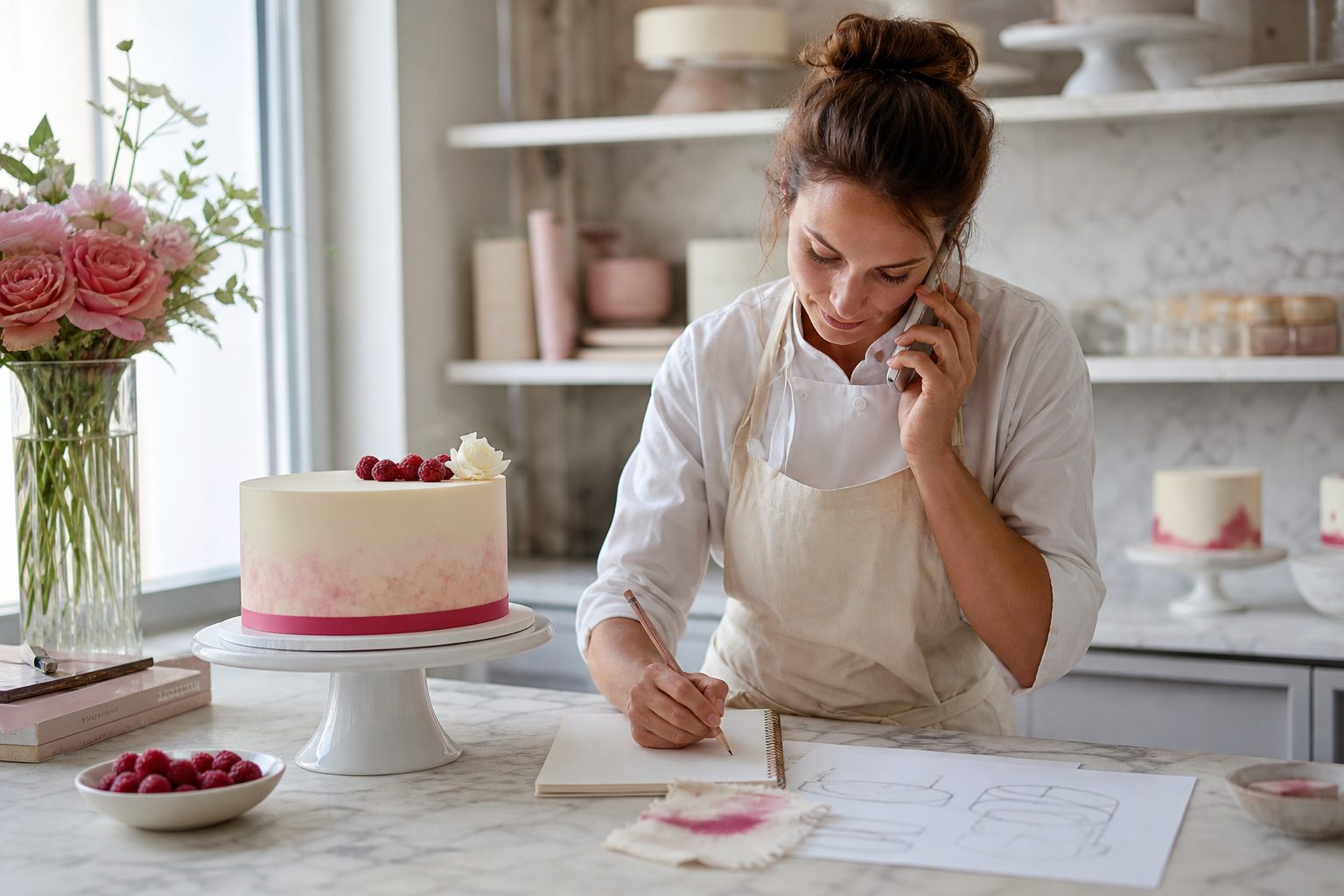
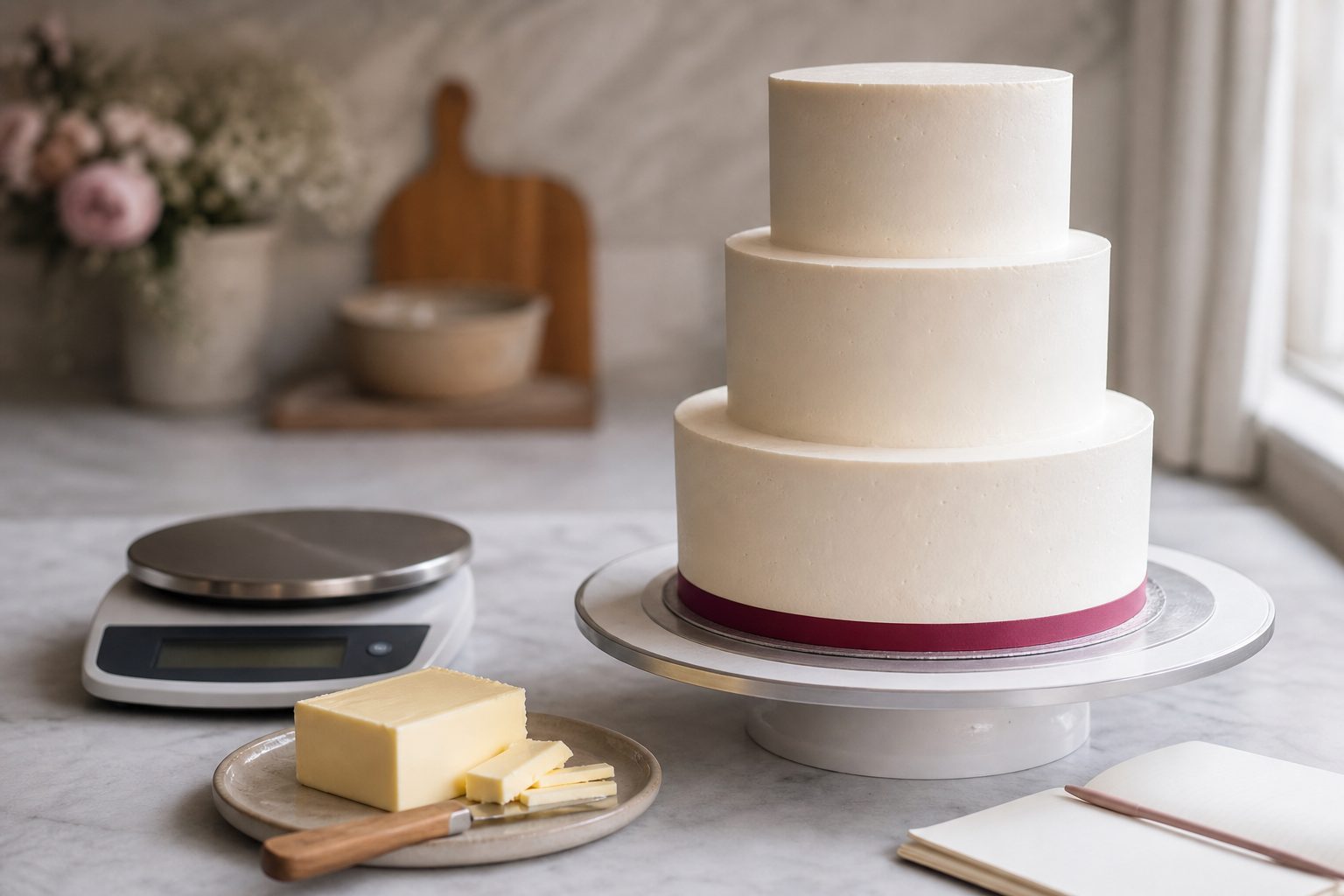
A couple walks in with a Pinterest photo and a headcount: one hundred guests. They want a three tier cake, six, nine, and twelve inch rounds, for a Saturday evening wedding. The design calls for smooth vanilla buttercream with fresh flowers added on site. They ask about strawberry filling between the top and middle tiers, and lemon curd for the bottom. Delivery is to a venue thirty minutes away, and the cake must be set up by four in the afternoon.
This is not a rare order. In the wedding season, most bakeries see requests like this every week. Each variable, servings, flavors, delivery, and decor, triggers a cost that needs to be counted and charged. Missing one means losing profit or scrambling at the last minute.
To price this cake, the work starts with a line by line breakdown: ingredients, supplies, labor, and every mile driven. Each gets its own row on the worksheet, with nothing left to guesswork.
Keep reading: How Butter, Egg and Cocoa Costs Reach Your Cake Price List
Batter and buttercream: weighing the real ingredient cost per tier
Flour, sugar, eggs and fat
The tiers are sized by diameter, but ingredient cost tracks with total batter volume. A six inch round at three layers takes about one and a half quarts of batter. The nine inch needs three quarts, and the twelve inch can use nearly five. That's close to nine and a half quarts total for a cake to serve one hundred.
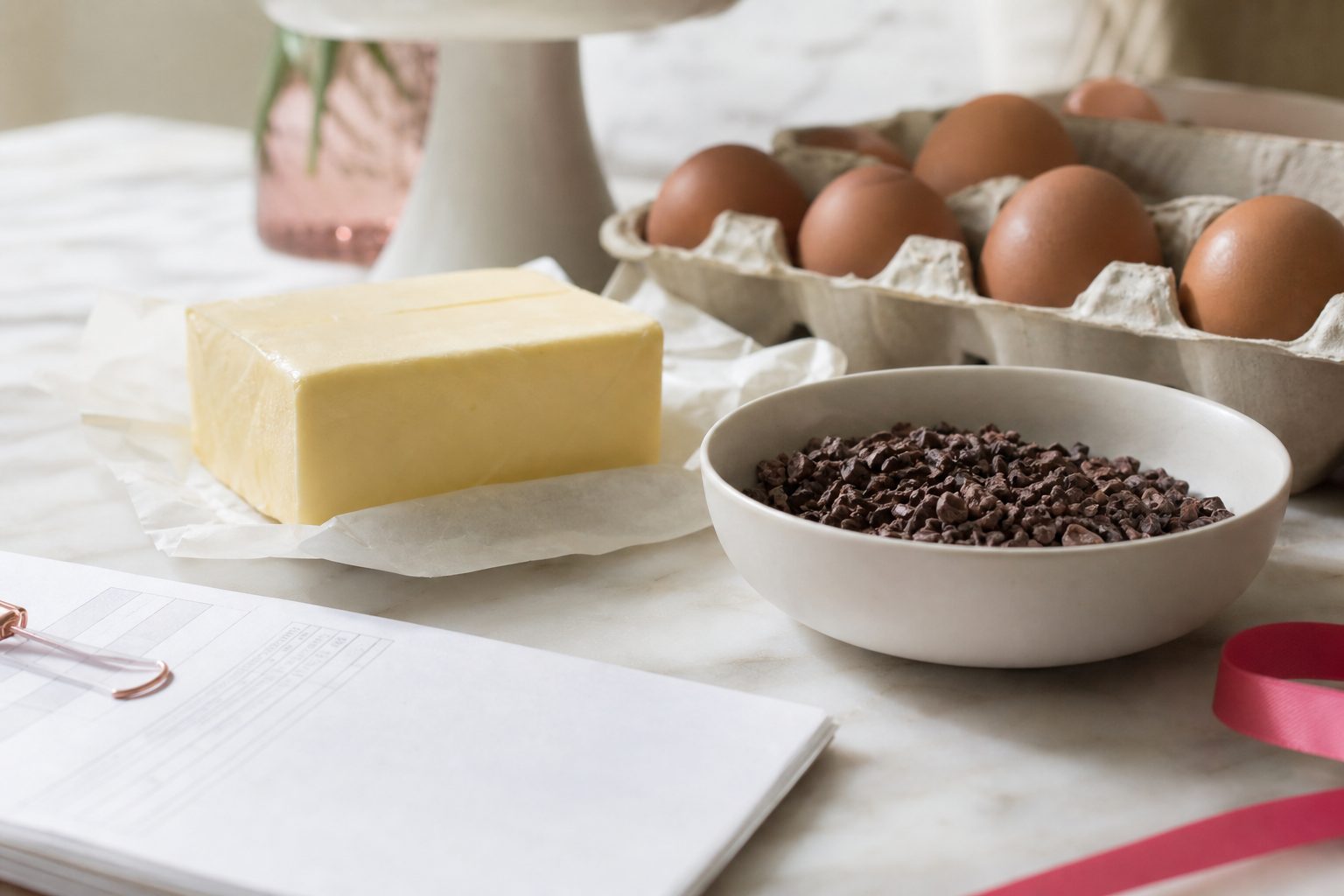
For each batch, the bakery weighs flour, sugar, eggs, butter, milk, and leavening. Most shops price these by the pound or quart, not by the package, to track real costs. For an American butter cake, butter and eggs are the priciest. In spring 2024, a pound of butter can cost between three and five dollars wholesale, and this cake will need at least two pounds in the batter alone.
Buttercream: more than sugar and air
Classic American buttercream for a cake this size takes as much butter as the cake itself, sometimes more. With a crumb coat, final layer, and piped borders, expect to use four to five pounds of butter and ten to twelve cups of powdered sugar. Vanilla extract and milk or cream add another few dollars to the line.
It's easy to underestimate the real cost of frosting, but on a three tier cake, shorting the buttercream can lead to a skimpy finish or a scramble to mix more mid-decorating. Each batch should be weighed and costed, not rounded down.
Fillings, fresh fruit and the shelf life that limits when you can build
Strawberries and curd: perishables and prep
Strawberry filling often means real berries, cooked into a spread or sliced fresh. Lemon curd typically gets made in-house, with eggs, butter, sugar, and lemons. Both fillings are perishable and need to be made within a day or two of assembly. For one hundred servings, the bakery will need at least three pints of strawberries and a quart of curd to fill and layer generously between the tiers.
The cost here is not just in the fruit and dairy. Strawberries spike in price out of season and have to be checked for bruises or spoilage. Lemon curd uses more eggs and butter, adding to the total ingredient line. If the bakery chooses to buy fillings, it may save time but often pays more per serving than house-made.
Assembly timing: the ticking clock
Because fresh fruit and dairy fillings shorten shelf life, the bakery cannot build this cake too early. Most shops assemble the filled tiers the night before, chill overnight, and stack early the day of delivery. This constraint means tight scheduling and sometimes a second round of prep work late in the week.
Any slip in timing can mean soggy layers or fruit breaking down before delivery. For cost, this means accounting for spoilage risk and sometimes an extra batch to cover a failure.
Keep reading: The Custom Cake Intake Checklist for the First Phone Call
The nonfood line: boards, dowels, boxes, ribbon and the stand
Boards: one for each tier, one for the whole
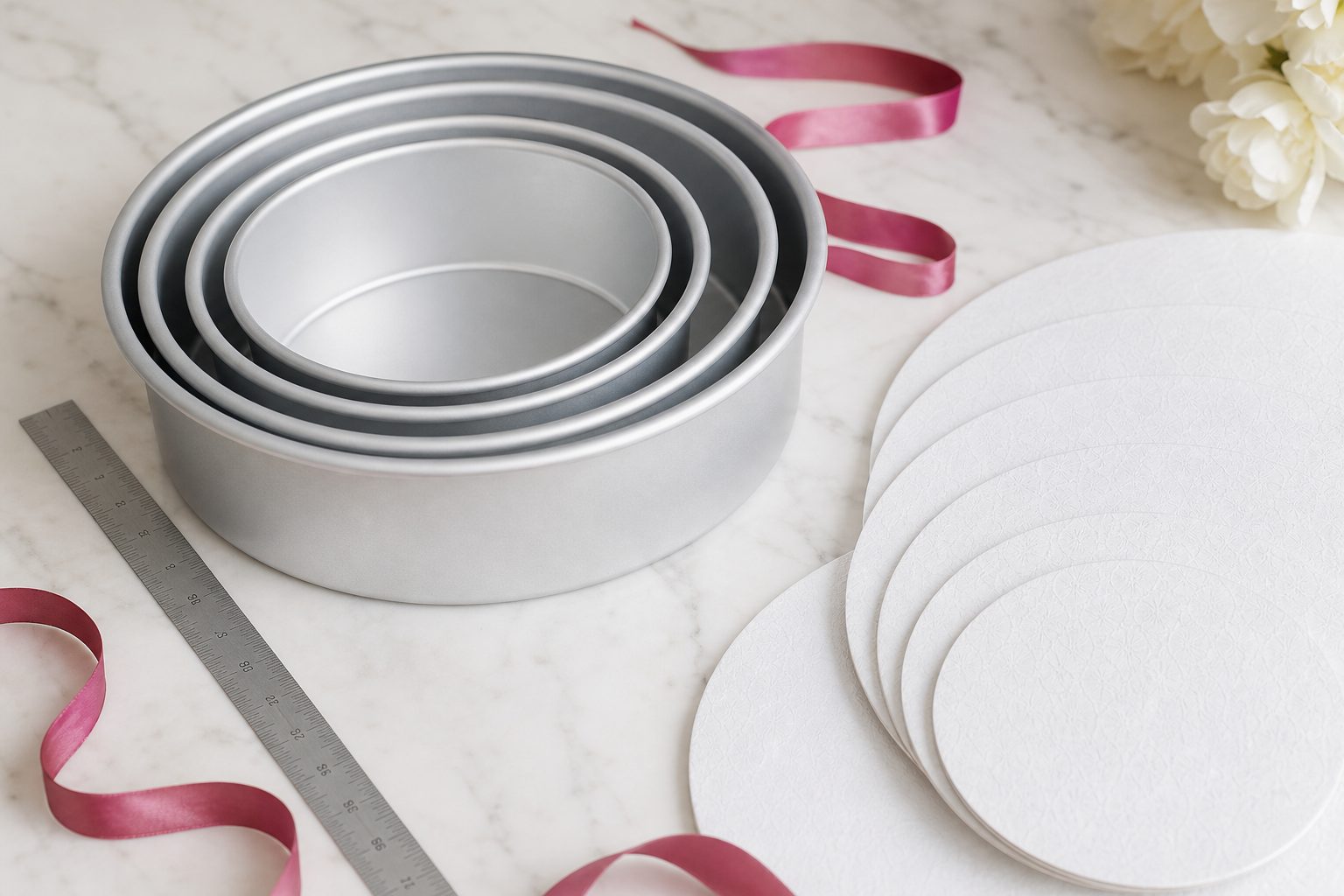
Each tier needs its own cardboard or drum. The base board supporting all three usually gets covered in foil or fondant and sometimes needs to fit a venue stand. Boards run from less than a dollar for a single layer up to ten dollars for reinforced or decorative options. For a cake this size, expect at least four boards: one under each tier and one for the base.
Dowels and support
Stacked cakes must travel and sit for hours at a venue. Wooden or plastic dowels in each lower tier are required. Most shops use four to six per tier, cut to height, with a center dowel running top to bottom for stability. Dowels usually run a few cents each, but the labor to cut and place is worth more.
Boxes and packaging
Transporting a three tier cake calls for a tall, sturdy box or a custom carrier. Off-the-shelf boxes often need modifications, and many bakeries add slip mats or foam for the drive. These supplies can add up to five to ten dollars per cake, not counting the space needed in the delivery vehicle.
Ribbon and cake stand
Edible ribbon or satin trim is a popular add-on, especially for wedding cakes. Some bakeries provide a basic stand for display, with a rental fee and a deposit to ensure return. If the customer requests a specific color or a premium stand, those costs must be added in full or as a pass-through line.
Decorator hours at a rate that pays a person, not a hobby
Mixing, baking, cooling
Baking three tiers rarely fits in a single oven run. Batter mixing, pan prep, baking, and cooling take half a workday for one person. With labor rates in most states above fifteen dollars per hour before taxes and benefits, every minute counts.
Stacking, crumb coating, and chilling
Once the cakes cool, crumb coating and chilling are next. This step prevents crumbs in the final finish and gives structure. Each tier must be leveled, filled, and stacked separately before the final assembly. Chilling takes time but little labor; the hands-on work is what needs to be paid.
Decorating: smoothing, piping, and florals
Finishing buttercream to a smooth wedding-ready surface is skilled work. Piping borders, adding fresh flowers, and setting up for safe transport can take two to three hours for a three tier cake. Good decorators work quickly, but the quality expected for a wedding means no shortcuts. If florals must be arranged at the venue, that time comes out of the same labor pool.
Some bakeries pay decor hours at a higher rate than baking, to retain skilled staff. Either way, undercharging for labor is the fastest way to turn a special order into a loss.
See how TieredOrders handles this for bakeries
Delivery time, mileage and the second pair of hands on site
Driving: more than the Google Maps estimate
Thirty minutes to the venue on paper often turns into an hour round trip, plus loading and unloading at both ends. Wedding venues can have long walks, stairs, or slow elevators. The cake must be secured in the vehicle and monitored for every bump and corner.
Most bakeries assign at least two people to deliver and set up a three tier cake. One to drive, one to stabilize the cake, and both to carry and assemble at the venue. If the venue has restrictions, like no parking at the door or a setup window, the time on site can easily match or exceed the drive.
Mileage and insurance
Delivery charges must cover not only fuel, but wear and tear on the vehicle, insurance, and the opportunity cost of staff being away from other orders. Many shops use a per mile rate, plus a minimum fee to account for time. For a thirty minute delivery, this can add up to two hours of paid labor.
Setup and handoff
Once on site, the team must set up the cake, patch any dings from transit, add fresh flowers, and sometimes coordinate with venue staff or florists. They may need to wait for the table to be cleared or for the room to be ready, adding more time. Any delay cuts into the rest of the day's schedule and needs to be considered in the delivery line.
Card processing, kitchen overhead and the allocation people skip
Card and processing fees
Most wedding cakes are paid by card. Payment processors charge between two and three percent per transaction, plus a flat fee. On a five hundred dollar cake, this can be ten to fifteen dollars lost to fees. Some shops add this as a line item, others build it into the price, but it cannot be ignored.
Kitchen overhead: lights, rent, licenses
No cake is made in a vacuum. Overhead includes rent or mortgage, utility bills, insurance, cleaning supplies, and business licenses. Each order must carry a share of these costs. A simple way is to divide total monthly overhead by the number of cakes produced, or to use a percentage markup per order. Failing to allocate overhead means the bakery is working for free after all the other bills are paid.
Missed allocations: the hidden risk
It is easy to forget small costs: parchment, gloves, dish soap, and trash bags. Over the course of a wedding season, these add up. Some bakeries estimate a few dollars per cake to cover these extras. Others roll them into the overhead line, but either way, they need to show up somewhere in the costing.
What the same cake should cost when it moves outdoors in July
Summer weddings bring extra complications. Buttercream sweats and softens in high heat. Cakes destined for an outdoor tent or garden need special handling. The bakery may need to upgrade to a more heat-stable frosting or add an extra delivery person to ensure safe handoff. Assembly on site becomes much riskier in July than in October.
Fresh flowers wilt faster and must be added at the last minute. Delivery vehicles may require cooling, using insulated carriers or ice packs. The risk of setup delays, cake collapse, or melting rises with the temperature, and every step adds more labor and supply cost.
Most bakeries charge more for outdoor summer deliveries, not as a penalty but to cover the real risk and effort. When quoting a price, the shop needs to explain why the same cake costs more on a ninety-five degree day: more labor, more product loss risk, and sometimes extra insurance or equipment. No one wants to deliver a melting cake to a marquee and watch hours of work slip and slide before the photographer arrives.
Building a line by line cost for a three tier wedding cake is time consuming but necessary. Every order is a little different, and anything skipped can eat the margin. Systems that track ingredient costs, labor, supplies, and delivery as part of the order form make this process faster and more reliable, especially in busy season. A tool that combines pricing rules, deposit capture, and a production calendar helps keep the business side as tight as the finish on the cake itself.