numbers and benchmarks
Cake Serving Counts and Batter Yields by Pan and Tier Size
Party servings and wedding servings are cut to different sizes, so one pan yields two different numbers. Batter volumes, bake times and serving counts for round, square and sheet tiers, pan by pan.
Wedding servings and party servings: the two cut sizes behind every chart
Every custom cake order starts with one crucial question: how many people will it serve? Serving sizes are not universal. They depend on the occasion. For weddings, slices are cut smaller. The typical wedding serving is one inch by two inches by the tier height, meant for a formal plated dessert after a meal. Party servings are larger, about two inches by two inches by the tier height, intended for a casual gathering where cake might be the main treat.
This difference means that the same cake will yield more slices for a wedding than for a party. Any serious serving chart will show both counts: wedding and party. When pricing or planning, always clarify with the client which serving size they expect. Miscommunication here can lead to over- or under-ordering, and unhappy customers on event day.
All major pan size charts and bakery guides describe both cuts because they matter for quoting, recipe scaling, and final cost. Understanding the reason behind the numbers will help you read charts with confidence and explain serving counts to your clients without confusion.
Keep reading: Inside a Two Person Cake Shop's Week, Tuesday to Saturday
Round pans from six to sixteen inches: batter volume and serving count
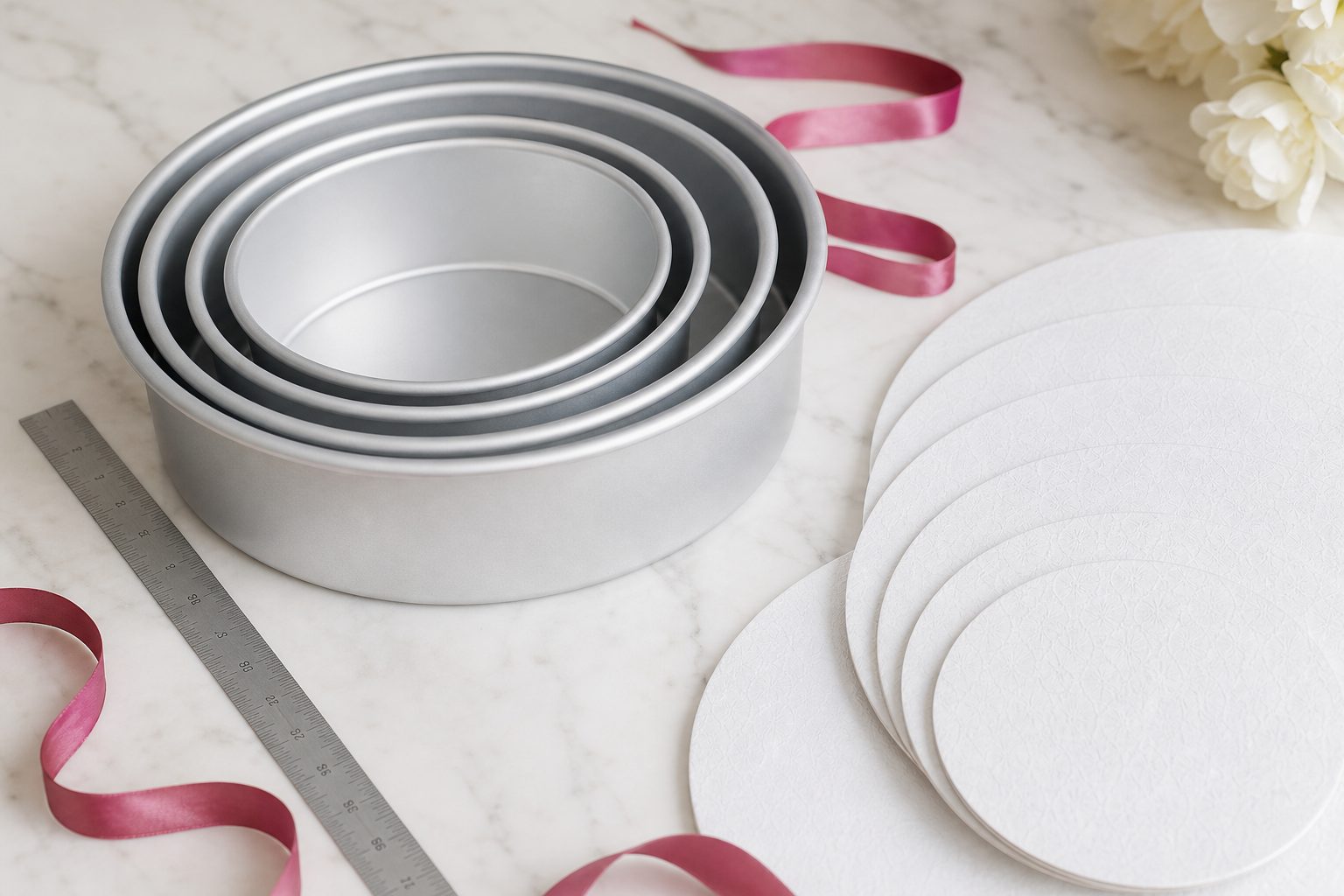
Round cakes are the most common choice for both weddings and parties. Most shops stock round pans in even sizes from six to sixteen inches in diameter, usually two inches deep. Each increase in pan size increases both the batter needed and the number of servings, but not in a linear way. The area of a circle grows with the square of the radius, so a ten inch pan needs about twice as much batter as a seven inch pan.
Batter volumes for round pans
A standard two inch deep round pan needs about:
- Six inch: 2 cups batter
- Eight inch: 4 cups batter
- Ten inch: 6 cups batter
- Twelve inch: 8 cups batter
- Fourteen inch: 11 cups batter
- Sixteen inch: 14 cups batter
These values assume you fill pans about two thirds full for proper rise. If using three inch deep pans or planning to torte, adjust upward slightly.
Serving counts for round tiers
For a wedding cut, a six inch round yields about 12 servings. An eight inch gives about 24. A ten inch offers around 38, twelve inch about 56. Party serving counts are lower: about 8, 14, 21, and 32 for the same pan sizes. The gap widens as pan size increases because the number of small wedding servings grows faster with area than the larger party servings.
When quoting multi-tier cakes, add up each tier individually. Most serving charts use the standard two inch height per layer, but always check the expected tier height with the client, as taller tiers stretch the number of servings.
Square and sheet pans, and why a square yields more than a round
Square and rectangular cakes return higher yields than rounds of the same width. The reason is simple geometry: a square or rectangle fills more of the tray's footprint, leaving less wasted space at the corners. Slicing is also easier: no wedges, just straight cuts.
Square pan serving counts
A standard eight inch square, two inch deep, gives about 32 wedding servings or 16 party servings. At ten inches, the count rises to about 50 wedding servings or 24 party. Compare that to round pans of equal size, and the square gives you about 20 to 25 percent more servings.
Sheet cakes
Sheet cakes come in fractional sizes based on a full baking sheet. A quarter sheet is usually nine by thirteen inches, a half sheet around twelve by eighteen inches. A quarter sheet gives about 24 wedding servings or 12 party servings. A half sheet offers around 54 wedding servings or 24 party servings. Full sheets are mostly for very large events.
For custom orders, always ask whether the client expects a true sheet cake or a slab made from stacked and trimmed layers. This affects both the yield and the build time.
Keep reading: How to Structure Cake Order Deposits, Balances and Cancellations
Tier height, torting and the difference between two layers and three
Tier height is another variable that affects serving count and cake appearance. Most serving charts assume a standard four inch tall tier, made from two baked layers with one filling. Some bakers build five inch or even six inch tall tiers, either by torting (cutting layers in half and filling) or stacking three layers. Taller tiers look impressive but do not necessarily yield more servings, unless you adjust your cutting method.
Standard versus tall tiers
For a taller tier, slices are cut thinner than the standard one inch wide, so that each serving is roughly the same volume as the original. If you cut a five inch tall cake the same way as a four inch, guests end up with oversized servings and the yield drops. Some bakers cut tall tiers horizontally after slicing, to keep portion size consistent. It helps to explain this to clients who want the look of tall tiers but need to serve a set number of guests.
Torting also impacts the amount of filling and the work involved. More layers mean more stable stacking, but also more time to fill and smooth. For cakes with fruit or mousse fillings, extra tortes may need supports or a dam to prevent bulging.
Bake times and temperature as pan depth and diameter change
Bake times rise with both pan size and depth. A six inch round, two inches deep, bakes in about 25 to 30 minutes at 350 degrees Fahrenheit. A twelve inch round can take up to 55 minutes or more at 325 to 350 degrees. The larger the pan, the more you risk over-browning the edges before the center finishes.
For deep pans (three inches or higher), lower the oven temperature by 25 degrees and increase the time. Many bakers use a heating core or a flower nail in pans ten inches and up to distribute heat, preventing underbaked centers. Sheet cakes generally bake faster than deep rounds, thanks to their shallow depth.
Always test doneness in several spots with a toothpick or cake tester. The cost of rebaking a large tier is high, both in ingredients and time, compared to waiting an extra few minutes to check.
See how TieredOrders handles this for bakeries
Buttercream and fondant quantity per tier, by surface area
Estimating frosting and fondant needs can trip up even experienced bakers. The amount required depends on both the area to cover and how thickly you apply each coat. A standard four inch tall, eight inch round tier needs about two and a half cups of buttercream to fill, crumb coat, and finish. Larger tiers require more by surface area, not by diameter alone.
Buttercream amounts by tier size
- Six inch round, four inch tall: about 1.5 cups
- Eight inch round, four inch tall: about 2.5 cups
- Ten inch round, four inch tall: about 3.5 cups
- Twelve inch round, four inch tall: about 4.5 cups
For square tiers, increase by about 25 percent. If piping borders or ruffles, add extra based on the design.
Fondant coverage
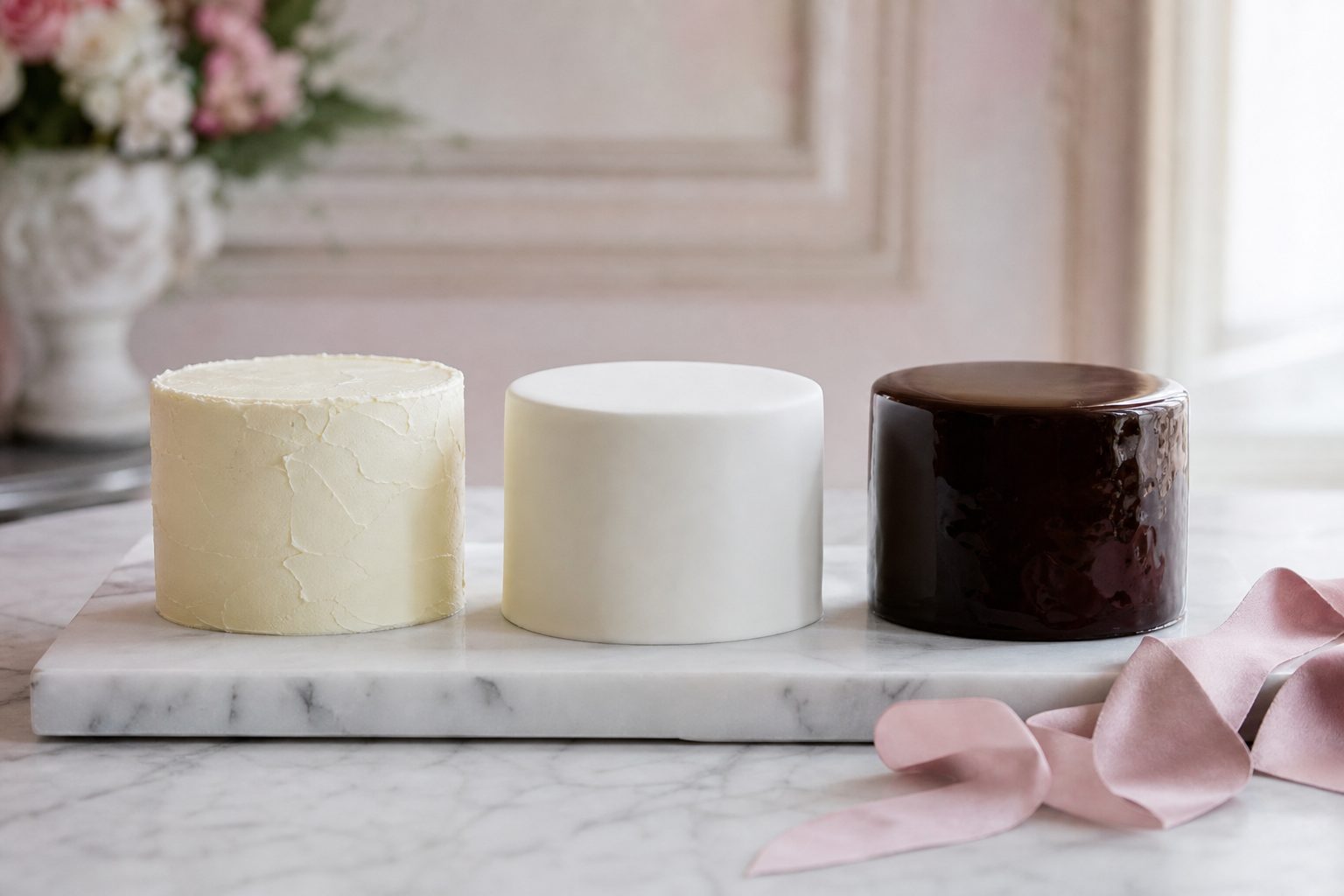
Fondant coverage is usually measured by diameter. An eight inch round, four inch tall, uses about one and a half pounds of fondant for a clean finish. For square tiers, the corners and straight sides require more fondant for ease of handling, so round up your estimate.
It pays to keep a written table of buttercream and fondant needs per tier to avoid running short during assembly. Wastage and overmixing both cut into margins quickly.
Scaling a recipe up without scaling the leavening the same way
When increasing a cake recipe for larger pans, scaling isn't always straightforward. Most ingredients can be doubled or tripled directly, but leavening agents (baking powder and baking soda) behave differently. If you scale leavening in direct proportion to volume, you risk bitter taste, uneven crumb, or collapse during baking.
The reason lies in chemistry. Larger cakes bake more slowly, so gases have more time to escape before the crumb sets. This means you often need slightly less leavening per cup of flour than in a small batch. Many bakers reduce baking powder by about one quarter when doubling or tripling a recipe. For delicate cakes or those with acidic ingredients, test a small batch first to avoid waste.
Eggs can also pose scaling problems. If a recipe calls for three eggs and you need one and a half times the batter, use two large eggs plus one yolk. For whites, whip separately and fold in to maintain structure. Keep notes on every batch and adjust for oven quirks and ingredient brands.
Building a standard tier combination list you can quote from
Most custom cake orders start with a guest count and finish with a tier diagram. Having a list of standard tier combinations makes quoting faster and more accurate. Popular stacks for weddings include six, eight, and ten inch rounds (serving around 74 wedding portions); eight, ten, and twelve (serving about 120). For larger events, add a fourteen or sixteen inch base.
Square stacks offer more servings in the same footprint, but can be harder to ice smoothly. Sheet cakes are often used as kitchen cakes to supplement servings for large weddings, letting the display cake remain manageable in size.
Keep a table of combinations handy with the servings for both wedding and party cuts. This saves time during consults and helps manage both pricing and production. Update your list as you refine your preferred heights and designs, and note any commonly requested variations, such as extra tall top tiers or dummy layers for display.
With hundreds of potential combinations, manual tracking can be tedious. Many shops now use digital order intake forms that calculate servings, tier sizes, batter needs, and even deposits automatically, all tied to the shop's production calendar. This streamlines quoting and reduces errors, especially during busy season.