field report
Inside a Two Person Cake Shop's Week, Tuesday to Saturday
A small custom shop runs the week backward from Saturday: orders and shopping Tuesday, bake Wednesday, fill and crumb coat Thursday, finish Friday, deliver Saturday. Here is how those days really load.
Monday: reading the order board and locking the week's date list
Monday mornings in a two person custom cake shop start without mixing bowls or icing bags. Instead, the lead baker and assistant stand at the order board, reviewing each ticket for the week. The board holds every confirmed cake, with pickup or delivery times penciled in. This is the moment to double check the week's workload and resolve any conflicts.
Special attention goes to orders with unique flavors or last minute changes. If a customer called over the weekend to add a fondant topper or swap a filling, those edits must appear on the board and in the digital schedule. This avoids surprises once production begins. The team checks for overlapping delivery windows or orders that need multiple elements assembled on site.
After confirming the cake count and due dates, the team locks the production calendar. This list drives every step, from ingredient orders to how many hours go to sugar work or late night boxing. Once the calendar is set, the rest of the week runs on this backbone. Any new order after today is assessed for fit, not just by flavor but by time and refrigerated space.
Keep reading: How to Structure Cake Order Deposits, Balances and Cancellations
Tuesday: shopping list, dairy order and printing the bench tickets
Tuesday is for supplies. The assistant prints the finalized bench tickets for each order, breaking out every flavor, filling, and decorative component. The head baker turns these details into a master shopping list. Butter, eggs, sugar, and cream are tallied by batch, not by cake. Specialty items, like raspberry puree or gold leaf, are flagged for pickup, since not every supplier delivers on short notice.
The dairy order must go in early, as many small shops schedule milk and cream deliveries either Tuesday or Wednesday. Misjudging quantities here can lead to frantic store runs later in the week, especially if large wedding cakes are on the board. The bakers check expiration dates and freezer inventory to avoid spoilage or shortages, prioritizing perishables for the second half of the week.
Bench tickets, once printed, get clipped to clipboards or pinboards above the main work table. Each ticket lists the design reference, size, flavor, filling, and pickup or delivery deadline. This lets the crew see at a glance how many cakes need to be started Wednesday and what can wait until Thursday. Before closing, the team reviews the shopping list one final time, then heads out for bulk ingredients and any specialty supplies not on the usual delivery route.
Supply Chain Hiccups
Occasionally, an item will be out of stock at the supplier, think freeze dried strawberries or the blue food dye a client requested. In these cases, the team calls the customer right away to discuss substitutions. Keeping the lines open avoids last minute panic and builds trust for the next order.
Wednesday: bake day, wrapping layers and the freezer plan
Wednesday is bake day. The shop fills with the smell of vanilla, chocolate, and spices by mid-morning. The head baker mixes base batters in bulk, measuring by weight for consistency. Cakes go in the oven in size order, so larger tiers have time to cool before wrapping. While cakes bake, the assistant cleans, preps pans, and lines up boxes for storing layers.
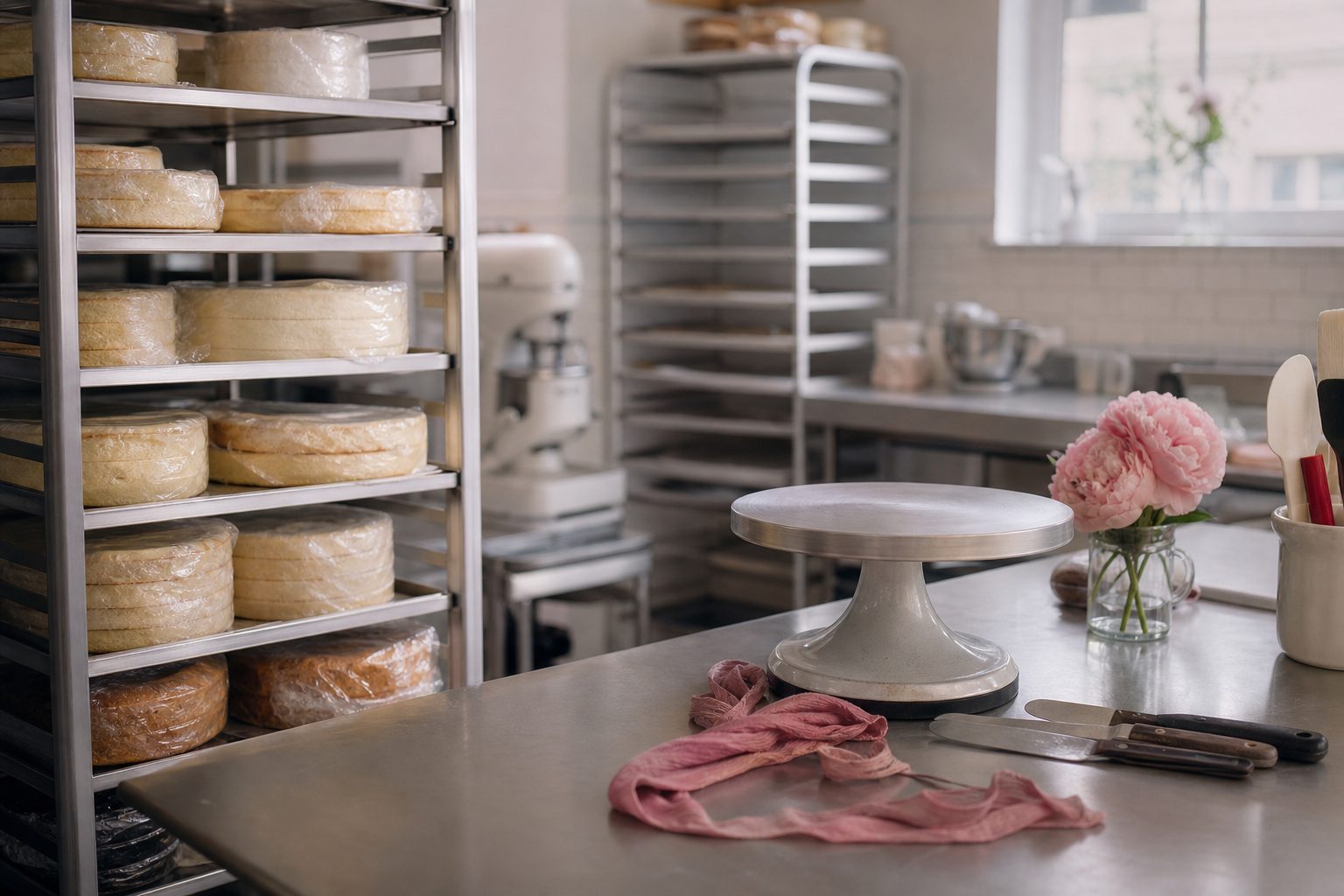
Each cake layer, once cooled, is wrapped tightly in plastic wrap. Some are destined for the walk-in fridge, others for the freezer. The freezer plan is critical in a small shop; with limited space, cakes needed for Saturday are frozen to lock in moisture, while those for Thursday and Friday are kept chilled. Freezing also gives an edge for intricate carving or shaping later in the week.
Any extra batter is portioned for cupcakes or cake tastings, minimizing waste. The end of Wednesday sees racks stacked with labeled cake layers, each tagged by order and delivery date. The team double checks the bench tickets against the actual product to catch any missed flavors or sizes. This is when the week's success is won or lost; a missed bake means a scramble later, and there is rarely extra time to spare.
Keep reading: Buttercream, Fondant and Ganache Compared on Cost, Heat and Labor
Thursday: fill, stack, crumb coat and the walk in shuffle
Thursday morning brings the first assembly push. Starting with the earliest due cakes, the team mixes buttercream and preps fillings. Fruit compotes, ganache, or mousse are piped between layers. Cakes are then stacked, leveled, and given a light crumb coat. This thin layer of icing locks in crumbs and sets the stage for a smooth final finish.
The walk-in fridge becomes a puzzle. The assistant carefully shelves each assembled cake, making sure nothing tips or smudges. Cakes for Friday delivery are placed toward the front, while Saturday's orders are stored in back to keep them cold for as long as possible. Some cakes, especially those with perishable fillings, require extra monitoring, there is no room for spoilage.
Throughout the day, the bakers rotate between stacking cakes and prepping decorations. Sugar flowers, fondant accents, and hand-painted pieces dry on sheet pans or foam boards. Each item is cross-checked against the bench tickets and the order board, ensuring that all elements are ready for Friday's finishing work.
Multi-Tasking and Timing
With only two people, every minute counts. While one decorates, the other washes pans, mixes more icing, or preps boxes for the next day. Sometimes the crew runs late into the evening, especially if a cake needs an extra chill or a complicated structure.
Friday: final finish, sugar flowers, boxing and the delivery route
Friday is the most intensive day in the shop. The team starts early, reviewing each cake's design one last time. Final coats of buttercream or fondant go on, with edges smoothed and corners squared. The head baker pipes borders, applies edible gold, or airbrushes ombré effects. Sugar flowers and other decorations are attached with care, often with tweezers or food-safe glue.
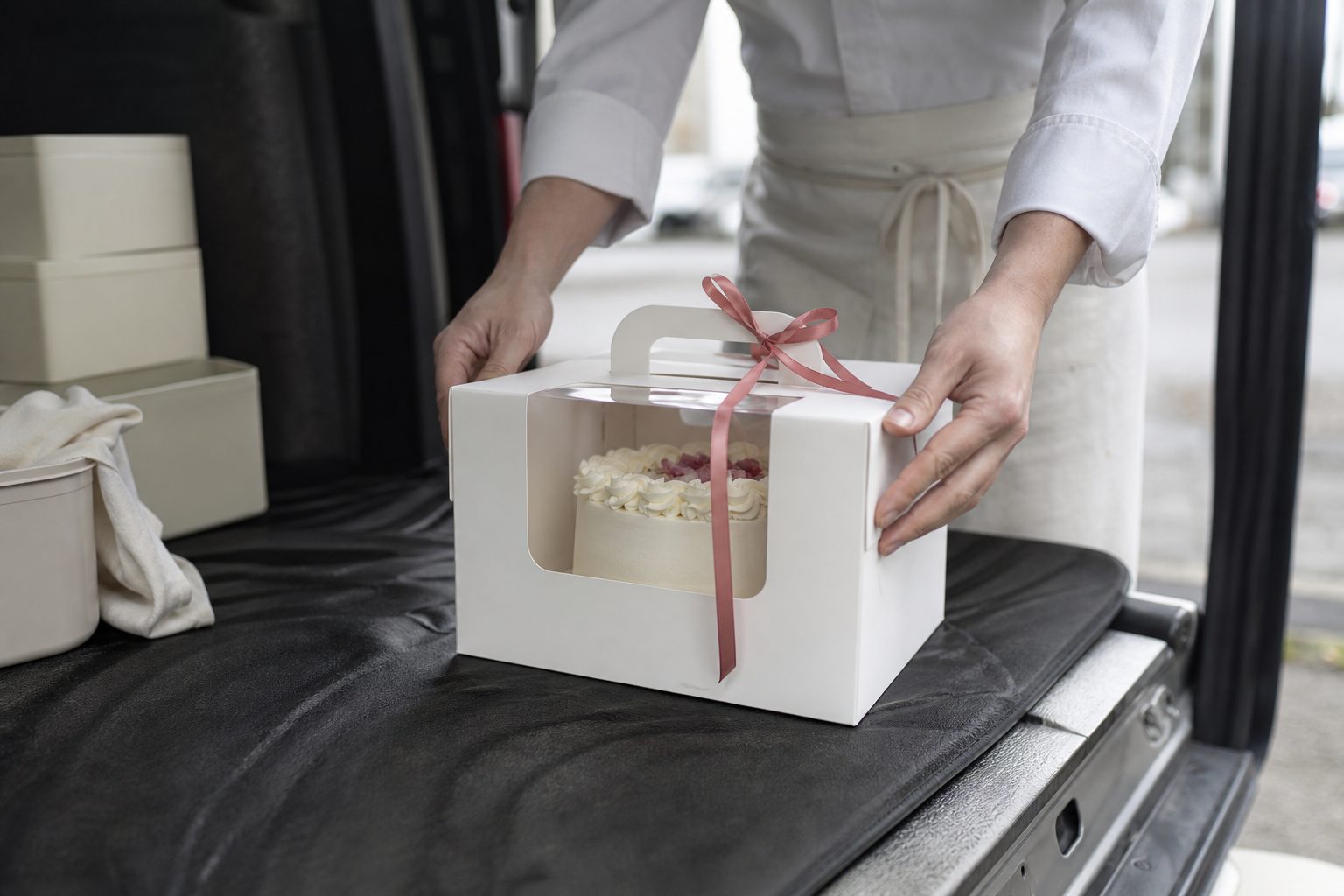
Once the cakes are finished, each one is boxed and labeled by customer, flavor, and delivery window. Any special handling instructions, such as "keep refrigerated until assembly" or "top tier to be added at venue", are written on the box. The assistant maps the delivery route, prioritizing venues with narrow setup windows or distant locations. Cooler packs and non-slip mats are loaded into the van.
Most weeks, Friday ends with a packed walk-in, every cake ready for Saturday's push. The bakers sweep up sugar, empty trash, and check the order board for any last minute changes. If a customer calls in with a new allergy or special request, the team reviews whether it can be safely accommodated. More often, last minute tweaks are limited to packaging or delivery timing, not to the cake itself.
See how TieredOrders handles this for bakeries
Saturday: setup windows, venue access and the drive back
Saturday is for execution. The team loads cakes in order of delivery, with the largest and most fragile cakes secured first. Many venues offer short setup windows, often thirty to sixty minutes, so timing is crucial. The head baker confirms access codes, parking, and loading dock procedures the night before.
At each venue, the team inspects the cake table or stand before unboxing. Sometimes, a table is too wobbly or the location too warm; the bakers adjust quickly, moving the setup or adding extra supports. Wedding cakes with multiple tiers are often stacked on site, especially if they include delicate sugar flowers or fresh fruit. The team works efficiently, taking photos for their portfolio and texting the client or planner to confirm setup is complete.
After the last delivery, the team drives back to the shop, sometimes stopping for supplies or a late breakfast. The work is not over: boxes must be broken down, coolers cleaned, and the van swept out. Only then does the week's production truly end.
Where the week breaks when a rush order lands on Thursday
Rush orders are the wild card. When a new order lands on Thursday, the team faces a cascade of decisions. First, they check the production calendar and the freezer plan. If there is a spare cake layer or enough ingredients on hand, the order might be squeezed in. Otherwise, the bakers weigh whether to accept the job, considering both the shop's capacity and the risk to existing orders.
Adding a cake on Thursday means compressing the usual timeline. The team must bake, cool, and assemble in hours, not days. Freezer and fridge space become a juggling act. Decorations may need to be simplified or made with faster techniques. The head baker might need to stay late or come in early, shifting other tasks to the assistant. Every minute spent on the rush order is a minute taken from another cake.
If the rush comes from a loyal customer or a major venue, the team may prioritize it, sometimes at the cost of skipping lunch or delaying other deliveries. Communication is crucial: customers are told up front if the cake will be simpler or if pickup times are tighter. In busy weeks, a single rush order can ripple through the schedule, adding stress and raising the risk of mistakes.
Most two person shops learn to set firm boundaries, but the temptation to say yes is always there, especially when the order fills a slow week or comes from a valued client.
The two hours of Sunday that decide whether Monday works
Sunday is usually the closest thing to a day off, but many bakers spend a couple of hours preparing for the week ahead. This time is reserved for reviewing the upcoming orders, checking messages, and updating the order board. If a last minute change or new order comes in, it is logged before Monday morning.
Some bakers use Sunday to inventory dry goods, order supplies online, or bake sample cupcakes for tastings. Others spend time updating their calendar or prepping invoices. The most important task is confirming that every order is accounted for and that nothing has slipped through the cracks. A missed message or unconfirmed order can throw the whole week into chaos.
The two hours spent on Sunday are often the difference between a smooth Monday and a stressful scramble. For a two person shop, this quiet planning time is as important as any bake or delivery. It keeps the week on track and gives the team a fighting chance to handle whatever surprises come next.
For shops juggling multiple custom orders, the right intake and scheduling system can make these routines smoother. A tool that tracks order details, pricing, deposits, and the production calendar in one place takes the guesswork out of planning, leaving more time for actual baking.